Overzicht methode

Leer stap voor stap hoe we plasticafval volgen, analyseren en zichtbaar maken buiten Europa.
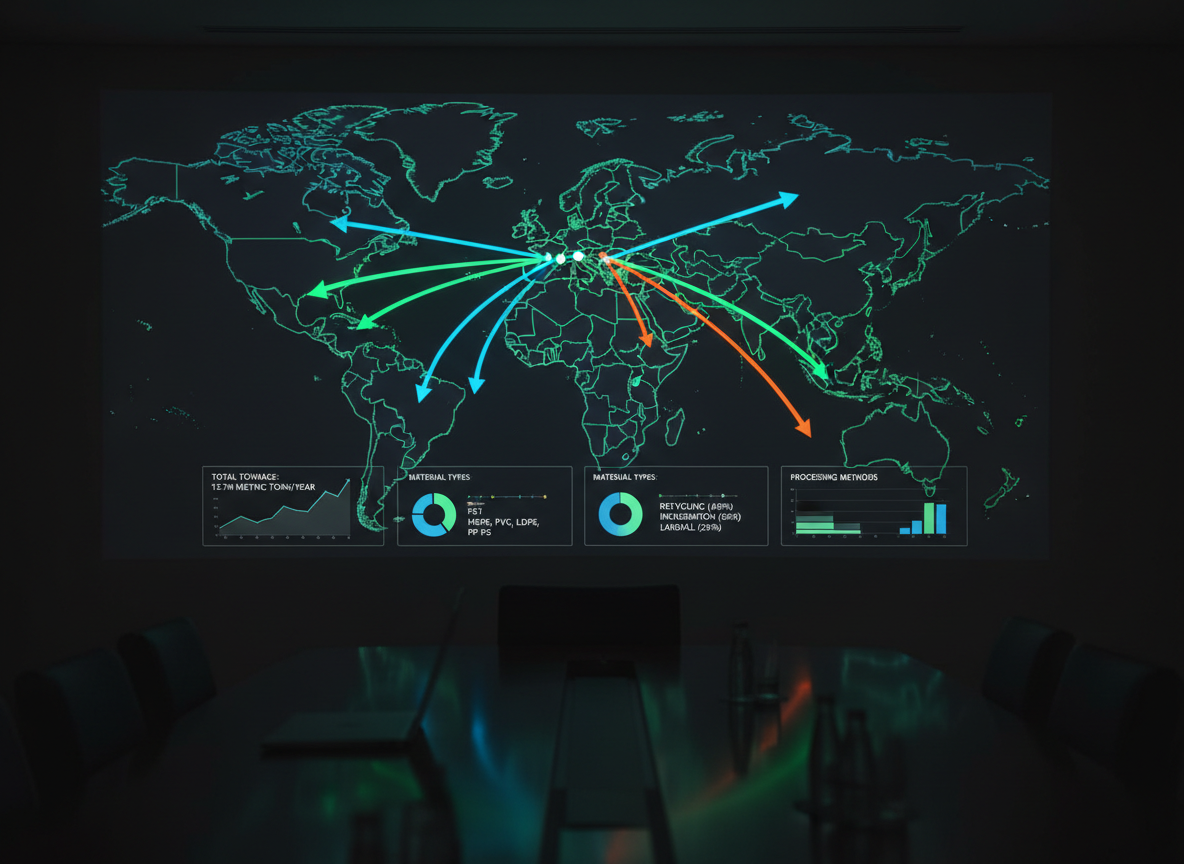
An overhead photographic view of a large digital dashboard projected onto a smooth, dark wall, visualizing plastic waste flows outside the European Union. Bright, clean infographics show color-coded arrows connecting EU member states to non-European regions on a simplified world map. Surrounding panels display key metrics: tonnage, material types, and processing methods, each in minimal, professional typography. The room itself is dim, with the projection providing the primary light source, casting a gentle glow onto a sleek conference table and a closed laptop in the foreground. Shot from a slightly raised angle, the composition emphasizes the clarity of data and geographic routes, with rich contrast between the luminous graphics and the dark surroundings. The mood is analytical, focused, and authoritative, reinforcing the educational purpose of tracking and understanding global plastic waste streams.
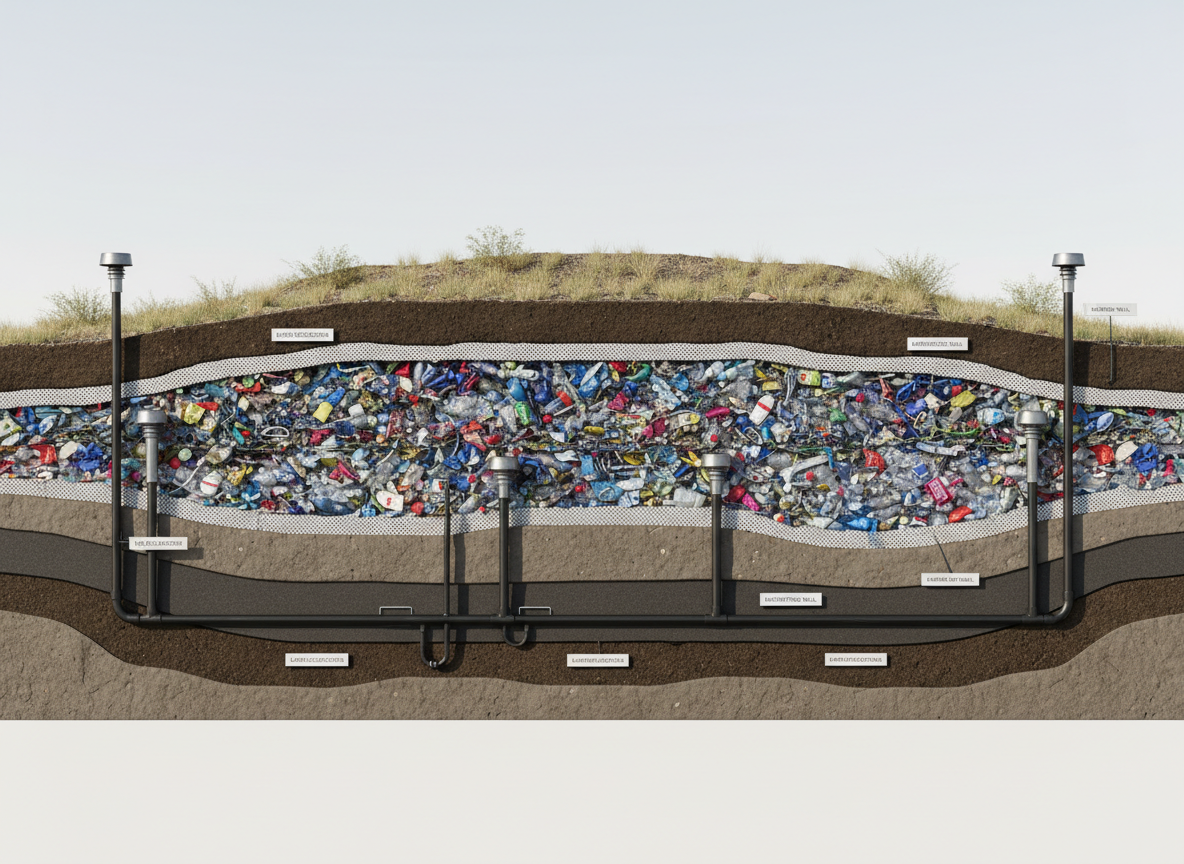
A cross-sectional, photographic-style cutaway of a modern engineered landfill cell in a non-European country receiving imported plastic waste. The scene shows layers of compacted waste with a clearly visible strata of colorful plastic packaging, films, and bottles sandwiched between soil and geotextile membranes. Leachate collection pipes, gas vents, and monitoring wells are cleanly exposed in the cutaway, each neatly labeled on small, unobtrusive signboards. Above ground, the landfill surface is covered with a thin layer of soil and sparse vegetation under diffuse afternoon light. The image is lit like a studio technical illustration, with even, soft lighting and high clarity across the frame. The composition is straight-on and symmetrical, conveying a calm, analytical mood and emphasizing environmental engineering and the end point of certain plastic waste streams exported beyond the European Union.

Hoe wij plasticstromen traceren

Trace the Waste 2 onderzoekt hoe Europees plasticafval buiten de EU wordt verwerkt, door beleidsdocumenten, handelsdata en veldonderzoek te combineren. Zo laten we studenten en docenten zien welke routes, actoren en risico’s in de keten verborgen blijven.

Methodiek

We werken met open handelsstatistieken, satellietbeelden, bedrijfsregisters en lokale interviews, en selecteren casussen op basis van exportvolumes, milieuschade, arbeidsomstandigheden en relevante lesvragen over mondiale afvalgovernance.
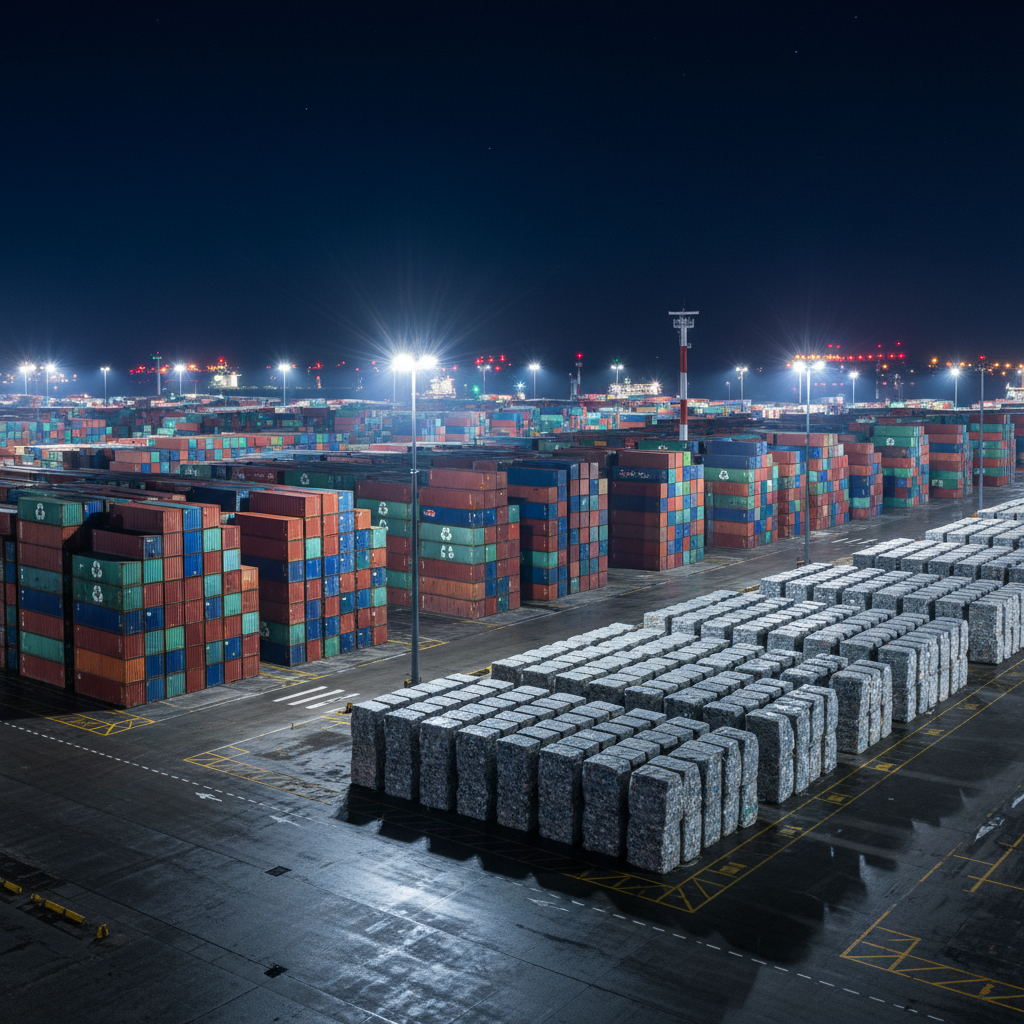
A nighttime photographic view of a sprawling non-European port terminal specializing in imported plastic waste, shot from an elevated vantage point. Rows of multicolored shipping containers marked with recycling symbols are stacked beside orderly grids of shrink-wrapped plastic waste bales on the asphalt. Cool white floodlights cast sharp, directional beams, creating dramatic shadows between stacks and reflections on wet ground from a recent rain. A radar mast and distant cargo ships form a faint horizon under a deep indigo sky. The composition uses leading lines from painted lane markings to guide the eye through the scene, with high clarity and controlled contrast. The atmosphere is calm, technical, and data-driven, emphasizing global logistics and traceability of plastic waste flows beyond the European Union in a precise, professional style.

Artikelen